Featured

About Me

PeraonlDevelopmentQuotes2

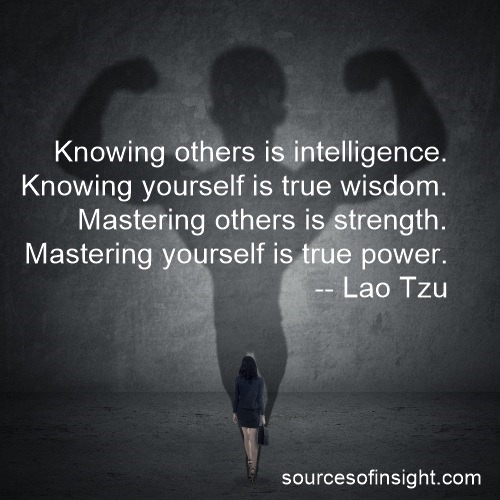
Understanding how intelligence, wisdom, strength, and power relate to oneself, comes from the intentional use of metacognitive strategies. It is our responsibility to share the various paths that lead to the development of the whole person.

  • Take in what you see and respond to it. (Self-Regulation)
  • Play with interconnectedness. (Input)
  • Give it meaning. (Elaboration)
  • Share it with others! (Output)

Dr. Stokes’ specialty is training, learning, cognitive education, and social-emotional learning, emphasizing assessment-driven decision-making. Her commitment to lifelong learning can be seen in the diverse positions and organizations she has worked for.

From authorship of publications such as:

  • Moving Toward Cognitive Excellence
  • Finding Out Real Knowledge
  • Powerful Learning Communities: A Guide to Developing Student, Faculty, and Professional Learning Communities to Improve Student Success and Organizational
  • Academic Curation: Cultivating Dynamic Learning Experiences in the Digital Age, and
  • Decision Making Behind the Use of Metacognitive Pedagogy within Education Methodology Coursework: An exploratory case study

to the creation of the facilitating deep understanding and conceptual thinking systems has always been a goal.

Dr. Stokes’ current work is to transform educational opportunities for educators, students, and the community to create learning legacies based on the following four principles:

  • using critique to evoke change
  • problem-solving by taking action
  • using inquiring during interdisciplinary reflection
  • using experience as a capacity to lead

Reflections on Baruti Kafele’s Guiding Questions

I was honored to have the opportunity to participate in a learning session with Principal Baruti Kafele at the recent virtual ASCD conference Respond, Reimagine, Restart.

I experienced something I have been needing for a long time…a guide who challenged thought through reflective questioning. Although many of my former students would complain and expound on the virtues of my teaching methodology, the one thing they would always say is, ” Your class was hard because you always made us think, support our thoughts, and refine our thinking. It was not like any other class because you forced us to reflect on what we thought we knew and then stretched us by asking divergent questions.”

Principal Baruti Kafele did this for me last week. He started by asking us…

“Who are you when the students’ faces appear in your class?”

B. K. Kafele July 2020

Although this seems to be a simple question, I did not take this question lightly. This is the type of question I would have asked my former students of Education. This is the type of question every teacher should be asking him or herself in both times of certainty and uncertainty. This question transcends the fact that we are wrestling how to use space and place for teaching and learning. It leaves the plane of delivery and enters the atmosphere of connections and relationships to learning.

Who are you when your students’ faces appear in your class?

As educators we have always been more than a vessel of subject content or an expert in a particular knowledge base. We play many roles in a synchronous symphony of our craft. In her book Enhancing Professional Practice: A framework for teaching, Charlotte Danielson (2007) discusses the complexity of teaching and says that this is “a thinking person’s job” (p. 2). How often do we stop and think about who we are in relation to our students? When we are working toward meeting state standards are we also asking how we are supporting our learners’ social emotional well being?

If we reflect on my last question then we need to include the idea that even though teachers are also business managers, human relations leaders, fine arts designers…they also need to be curators of trust, restorative justice, and feelings of well being.

So the one sentence, 11 word question asked by Principal Kafele is not a simple one to answer. However, it is one that needs to be asked within the context of each day you interact with your students.

I believe we must own, that whether we like it or not, we are the glue in our students’ lives.

We are the ones who provide a safe place for making mistakes, a conduit to their family structure, a service provider of goods and services for living healthy lives, and we are their guide understanding the impact of culture on them, their community, and their future.

After watching this video, how do you answer the 3 fundamental questions?

During this time of health and civil unrest, it is now more important than ever to reassess your responses to the following questions:

1. Who we are when the students’ faces appear in our class?

2. Are you all about these children?

,3. Are you excited about your craft?

4. Are you excited about your own professional growth and development so that you can bring more to your students?

Although difficult, this is a time for innovation, recreation, and beginning of new journeys. This is a time when we, in the field of education stand up and help construct learning spaces that are available and supportive of all learners.

So, I challenge you to take some time to answer Principal Kafele’s questions about you and your practice. Write it down. Make it purposeful. Make it actionable. But most importantly share it with others so that we can start a movement that defines the answer to the question of who are you as an educator?

COVID 19 and Remote Teaching Fall of 2020

Pandemic….

We have heard about them, watched them reek havoc in the movies and followed them from afar throughout the years. But in January of 2020 something changed. Those pandemics we heard about in foreign countries or in states we do no live in; they came to camp out on our doorsteps.

As the nation watched the numbers of infections and deaths grow rapidly across the United States, our neighborhoods, our families, and maybe even ourselves we paid attention. We washed our hands, used hand sanitizer, wore masks, stayed 6 feet away from others. And then it got scary. We were told to stay home from work. Some of us lost our jobs while others worked from home. and Our children stayed home from school and quickly learned that the computer was not just for watching movies, using social media and playing games.

Video conferencing took the forefront in our lives. We worked on these platforms, played on these platforms and stayed connected to loved ones. Zoom, YouTube, Teams, and Skype were not companies that were used by organizations wanting to decrease the digital divide. These were now competencies that everyone in the US was learning to use. Young and Old. Healthy and Sick.

The access to broadband internet was now essential, not just for those who could afford the connection. Teachers, who had worked so hard to retain the status quo of teaching face to face were thrown into a chasm! Not only were teachers required to know their content, teach it to all assigned students, and ensure assessments were passes with the level deem proficient….now they had to learn new software, web based platforms and most importantly how to teach effectively on this new frontier.

The problem is that we, the educators, those of us in educational technology were so busy trying to get everyone access, that we didn’t have time to teach the pedagogy we had been pushing for years. Yes years. Educational Technologist have been trying to convince public and private schools alike to use remote learning as a tool, a source, a mode of learning that will be essential in years to come when the students are starting their careers!

But alas, no, we were told year after year, inservice after inservice, webinar after webinar- that teaching from a blended or remote approach was not the correct way to teach. We were told that the inequity of access to broadband internet would deepen the economic divide within education. We were told that our students could not learn using these platforms as well as they could sitting in a classroom.

Then, the last week in March of 2020 the school districts started closing. The safety of our students’ health required the schools to teach differently for a few weeks. A month. Through the end of the school year. Over the summer. Now, here it is June and the educational leaders are asking what should happen next. How do we get back to normal education.

We Don’t. We change our perspective. We realize that the status quo of teaching for the past 100 years will not work moving forward. So what happens now? In an Education Week article written by Gina Denny, we are introduced to “6 classroom changes teachers will make when schools reopen”. Below are a mixture of Gina and my suggestions as how teachers can move forward to prepare for the Fall no matter what the roll out of attendance looks like.

  1. All educators should be using online technology to deliver assignments, notes and other resources- as a minimum. Making this change will help redirect parents and students toward a new platform of communication with schools. The families will know where to look for information and the students will learn their way around a remote classroom.
  2. Give feedback instead of individual scores. We know that feedback is vital in forming a growth mindset. Using formative assessment to encourage students to think beyond the given assignment, ask questions, and build content knowledge that will translate into active use of information will create student buy-in, reduce monotonous grading and most importantly squelch the idea that the students are having others do their work for them.
  3. Move toward solving problems and projects that can happen in student’s daily lives. Think application, analysis and creation. Give students ways to use the content you are teaching to enhance their lives and those around them. Let’s start using the information learned in our curricula to good use!
  4. Stop teaching alone. Plan ways to incorporate other professionals into your classroom learning. Invite guest speakers to your next video chat. These individuals could be anyone from authors to recording artists to local media personalities. Ask your associates if they would be willing to be a resource to your class. Have students call these individuals or send a message in the chat box to ask questions regarding the content you teach.
  5. Re-contextualize time. Be flexible. Some of your students will thrive in this new environment. They will succeed in managing their own learning time and processing. Others, will need more support at the beginning. Collaborate with the students to find out what their schedules are at home and how the two of you can create learning that is successful. Some students will have new responsibilities now that they are at home during the day. Understanding this and working together creates a path to success. It is time to model and then guide students’ management of their workload not dictate it to them.
  6. Assist your students in discovering MESH, thank you Tim Wise. For our students to be successful now and in the future they need to own how to get information from the Media, behave ethically, and understand how sociology and history have created the world we are in today. Teaching students to read laterally, use CRAP detection, write professional emails, and use word processors, spreadsheets, databases and design tools will create learned individuals. Isn’t that what we want our schools to be about?

The Art and Science of Learning in a Digital World

“We live in a digital world.”
I heard these words on the news this morning, and thought… what does this mean for the field of education? Reflecting on changes within schools over the past 10 years, I was struck by the number of companies and organizations that have become a central part of the landscape of P-21 education.

In the past formalized learning used teachers (experts in content), text-books, in person speakers, and additional primary and secondary sources to relay content and influence student learning. We used audio visual resources to recreate experiences we were sharing with our students. Each of these assets were contained. They were purchased and used “out of the box”.

Today teaching and learning is different. It happens in various spaces that include but are not exclusive to the classroom. Resources are templated but not all inclusive in use. In other words, whether employed in K-12 or post secondary institutions, you not only need to know how to design within these digital assets but which sources of technology compliment the learning theories the institutions subscribe too.

The educational technology field is crowed. We now have choices of video creation, curriculum mapping tools, digital gaming (gamification software) and online program management companies are vying for academic funds.

Rhetorical Question: Which digital resources are important to furthering student learning and which are “nice to have” but may have no educational impact?

Enter CIOs, VPAAs, Directors of Technology, Principals and even the classroom teacher. These individuals are responsible for ensuring that purchase of digital assets further student learning. But do these employees understand the intersection of technology and pedagogy with the learner at the center of the process.

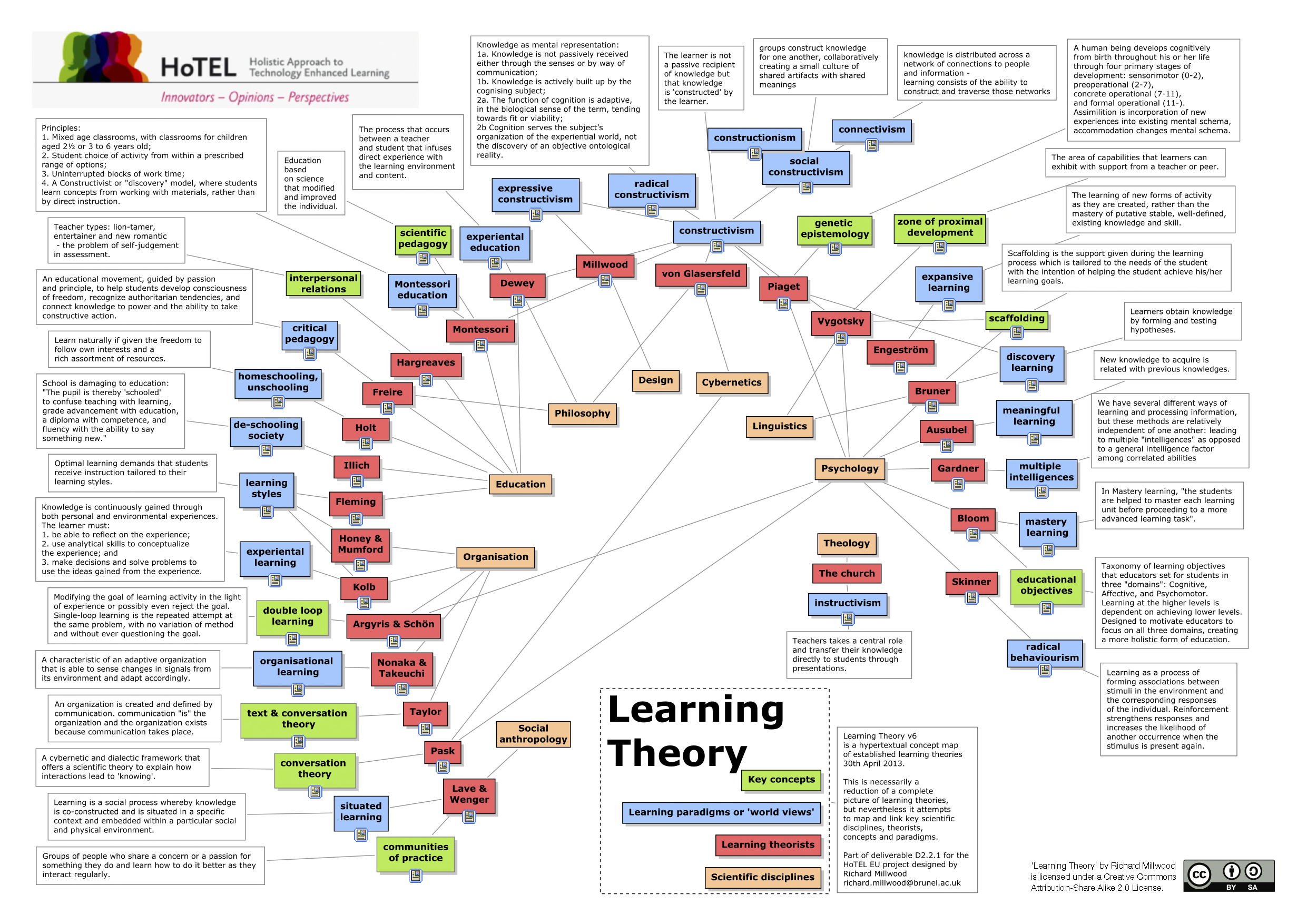
My contention is they don’t. Not as individuals. Based on a graphic Richard Millwood created, the amount of learning theorists and scientific disciplines needed to effectively identify and use technological solutions for learning is overwhelming. Take a look at the graphic below.

HoTEL
Holistic Approach to Technology Enhanced Learning


The implications are enumerable. So, how does an educational organization ensure those purchasing and implementing technological tools or systems, have the pedagogical and technological background needed to make the best decision possible? My suggestion… create an ecosystem that supports the purchasing, training and end-use of digital assets. To accomplish this a collaborative team should be constructed.

Identify five individuals who have a broad understanding of learning. Ensure that each is from a different discipline: (a) philosophy, (b) education, (c) design/training, (d) psychology, and (d) cybernetics. Then, as a team, create a statement of learning that best describes your organization’s approach to education.

Are you a social constructivist organization with a flair for double loop learning?

Maybe you are an institution who believes that interpersonal relations, critical and scientific pedagogy are the philosophical foundation of your curriculum construction.

No matter what the definition of learning theory you subscribe to, understanding the implications of choosing digital assets is the key. At least one person on your team needs to be able to translate your school’s learning theory into usage of educational technology to promote student learning. Then effectively translate the intersection of these two worlds to the rest of the educational stakeholders.

Without the understanding of how the digital world and learning theory intersect; educators and educational institutions are likely doomed to spend millions of dollars on assets that not only live unused in cyberspace, but possibly get in the way of student learning success.


Next Gen Learning

April 9, 2015 Vander Ark blogpost in Education Week.

As an individual who uses big picture and systems thinking to create plans of action, I thought it necessary to share key learnings about digital ecosystems within the field of education. In the April 2015 article written by Tom Vander Ark, he discussed the underinvestment and feeble articulation of learning platforms within institutionalized learning organizations. The contention was that schools were approximately 5 years behind in creating learning spaces that included competency-based and learner centered activities that shape future citizens to problem-solve, ideate, and test solutions.

My mind began to wonder… “Why are we so behind in our thinking?” ,,, “How is it that a field dedicated to life long learning, inquiry, and knowledge sharing continue to operate in a reactive versus proactive state?”

My contention is that we are so busy making sure that our content is delivered through reliable and valid outlets that we miss transformational opportunities to scale our field’s actions to build the human capital needed in a world with access to rapid information exchange.

Please do not misinterpret the statement above. Validity and reliability within knowledge sharing is vital to societal growth in skills and capacities. But maybe, the field of formal education should take a page from the book of inventors and explorers. Maybe, we need to put some of our resources into design thinking techniques to extend our capacity beyond what we know to be true and dabble in uncharted waters.

So let us journey into dissecting current ecosystem of learning. A plan of action needs to include: collection of the current state of learning institutions’  use of digital tools to provide content and socialization, iterative discussions of why we function within this paradigm, creation of a system that builds on the current ecosystem, and finally ideation of future functioning.

To provide background information about digital ecosystems I have included information from Vander Ark’s blog post, recently reprinted in Education Week’s April 15th issue, to gain more information regarding the idea of a digital ecosystem. Here is what he said,

[There] are 12 components of next-gen learning and 12 development vectors, groups of organizations on a similar path to next-gen learning, and 12 suggestions for philanthropies that want to accelerate progress.

Digital Components

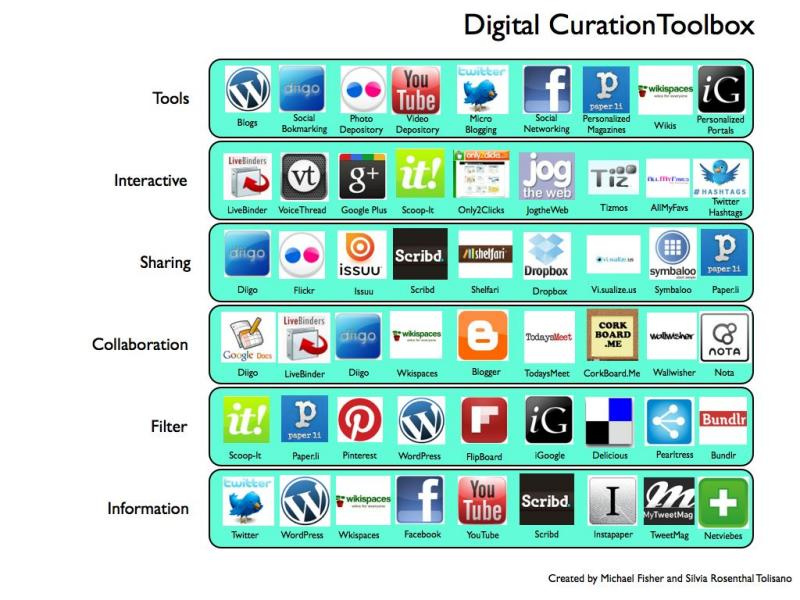
Digital Curation Tool Box Image

When defining components Vander Ark described them as digital platforms. Digital components such as  learning, relationship, content, integration, and assessment tools tend to be found in many schools today. What is not seen is the use of these tools to integrate the entire learning experience. If advising, cross-collaboration, data bases for knowledge sharing, integration of data across courses or grade levels, or a comprehensive personalized area that allows for artifact usage were intentionally applied within the student experience these components would enable learners to shine brightly.

Development Vectors

Forces that bring about change within the system can be referred to as development vectors. Re-envisionning social interaction, time, space, place and engagement might create pathways to non-identified learning options. Our field appears to be dabbling in this idea. I believe that many learning and training systems are just beginning to redefine how the concepts listed above have an effect on learning. The challenge is to change our lens as we envision the future. If we take this risk, a door will open to new ways of thinking about competency, data, dashboards and universal design of learning.

Alignment of Services

These groups of constellations create important and beautiful images when discussed in isolation. Each are important and have functions within learning that are all inclusive. However, the amazing power of alignment of student, faculty, institution and administration services is at our fingertips. With intentional integration through strategic planning; day to day operations could become more effective and powerful.

Questions to ponder:

  • What future benefits are derived, within the ecosystem of learning organizations,  through choosing use digital tools to drive systems thinking and learning?
  • What components are important and why?
  • Can they be used to scale effective societal growth?
  • Does mapping future structures, overarching themes, and concepts toward intentional use of these tools catapult institutionalized learning from yesterdays’ intended purpose?
  • Are learning organizations creating a planned digital ecosystem that includes vectors, components and constellations?
  • Is there a blueprint within each institution that shows the relationships between these components and how they will enhance society overall?

References:

Vander Ark, T. (2015). How learning will work in the near future: 12 features of nex-gen platforms. Education Week Blog Post April 15, 2015. Retrieved April 15, 2015 from http://blogs.edweek.org/edweek/on_innovation/2015/01/how_learning_will_work_in_the_near_future_12_features_of_next_gen_platforms.html

Post Industrial Paradigm of Instruction

paradigm shift

Re-post from Avila University CTL November 2013

The saying “May you live in an interesting age” reminds us that change often comes with wonderment, but also challenging, and sometimes uncomfortable moments in our lives. As higher education navigates the choppy waters of transition from an industrial age to an information age educators must be ready to expect a dramatic shift in practice. Let’s examine why this is so and how we can manage the challenges we now face.

The historical perspective of public education within the United States goes as far back as the building of the British Empire. The components and functions of modern public education were uniquely designed to support the growth of an empire with little or no technologies that could support standardization. For the British Empire to expand there was a need to create consistencies of skills, beliefs, and attitudes toward building a singular view of societal needs (Louis, 1999; Ferguson, 2003; Brendon, 2007). The ability of this empire to create a bureaucracy that identified common knowledge, consistent verbiage and text, protocols for learning behaviors, and acceptable social norms allowed for the birth of the public school structure as we know it. The rules and expectations found in public (and even some private) schools today extend back to a nation that required a people who all believed and acted within a given social norm. Thus jobs could be filled, economic growth occur, and social mores kept. Today students still sit in rows, sometimes even alphabetical order when learning. Hands are raised as signals for individuals to share learning; while testing of the 3 R’s is still in force.

However, what are the expectations of societal norms today? Have the changes in our global economic status altered our need for standardization? Is there a need for a bureaucratic approach to achieve success within our future workforce? Will those who contribute to our economic, political, and service success even considered a workforce anymore?

Movement from an industrial workforce to participants within an information age has brought about a need to move from the industrial approach to learning to that of a post industrial approach. Post Industrialized instruction per Reigeluth (2011) is defined as a reconstruction of task and space, Knowing the difference can help us in transitioning our approach to education.

‘Imagine a small team of students working on an authentic task in a computer-based simulation (the “task space”). Soon they encounter a learning gap (knowledge, skills, understandings, values, attitudes, dispositions, etc.) that they need to fill to proceed with the task. Imagine that the students can “freeze” time and have a virtual mentor appear and provide customized tutoring “just in time” to develop that skill or understanding individually for each student (the “instructional space”).’

How does one design a space within a Post Industrial institution? Consideration of learner centered instruction is one consideration. Articles and research on use of Learner Centered instruction has been contained within academic literature for at least the past 20 years. In 1996, a report entitled, Making Quality Count in Undergraduate Education was written by the Education Commission of the States. In this document 12 quality attributes of best practice in undergraduate education were outline. High expectations, integration of experience and education, and active learning were three qualities highlighted. These qualities are evident in Socially Constructed Learning Theory.

Socially Constructed Learning presupposes that students and professors will interact with content as well as each other to establish a learning space that is respectful and valued. Huba and Freed (2000) identify learner and professor actions that promote learner centered instruction. Learner actions include: (a) active involvement in learning content, (b) application of content knowledge to solve enduring and emerging issues relevant to daily life, (c ) achieving goals to increase critical thinking, (d) reflection and refinement of learning based on given feedback and, (e) acknowledging and acting on the assumption that learning is an interpersonal skill. Professor actions include: (a) transmission of formative and summative feedback to support student reflection and refinement of learning, (b) coaching, (c ) facilitation of interactive learning and, (d) collaboration to further both student and professor learning. Barr (1995) shared 5 levels of transformation within a university setting that enable and support student or learner centered design.

These include: Identify learning outcomes in detail; system for measuring these LOs; backward design on the curriculum; wide range of powerful options for achieving LOs; and continually investigate alternative methods for empowering students to learn (p.19-20).

When considering Avila University’s practice and policy structure, and Barr’s 5 levels of transformation, levels 4 and 5 appear to be where we as a Center for Transformational Learning can assist. To do this, sharing information regarding learning spaces, student-centered instruction, and professors’ new role in instruction are best described by Reigeluth’s (2012) instructional design for Post-Industrial paradigm of instruction.

‘Research shows that learning a skill is facilitated to the extent that instruction tells the students how to do it, shows them how to do it for diverse situations, and gives them practice with immediate feedback, again for diverse situations (Merrill, 1983; Merrill, Reigeluth, & Faust, 1979), so the students learn to generalize or transfer the skill to the full range of situations they will encounter in the real world. Each student continues to practice until she or he reaches the standard of mastery for the skill, much as in the Khan Academy (www.khanacademy.com). Upon reaching the standard, the student returns to the task space,where time is unfrozen, to apply what has been learned to the task and continue working on it until the next learning gap is encountered, and this doing-learning-doing cycle is repeated.

Well-validated instructional theories have been developed to offer guidance for the design of both the task space and the instructional space (see Reigeluth, 1999b; Reigeluth & Carr-Chellman, 2009c, for examples). In this way we transcend the either/or thinking so characteristic of industrial-age thinking and move to both/and thinking, which is better suited to the much greater complexity inherent in the information age – we utilize instructional theory that combines the best of behaviorist, cognitivist, and constructivist theories and models. This theory pays attention to mastery of individual competencies, but it also avoids the fragmentation characteristic of many mastery learning programs in the past.” (p. 8-9)’

References:

Barr, R. B., and J. Tagg. 1995. From Teaching to Learning: A New Paradigm for Undergraduate Education. Change 27 (6): 12–25.

Huba, M.E. & Freed, J.E. (2000). Learner-centered assessment on college campuses: Shifting the focus from teaching to learning. NY: Allyn & Bacon.

Reiguluth. C.M. (2012). Instructional theory and technology for the new paradigm of education. Reusta de Educatcion a Distancia, 32, 1-18.

The Scholarship of Teaching and Learning

Reposted from Avila University CTL website

Originally posted August 2014

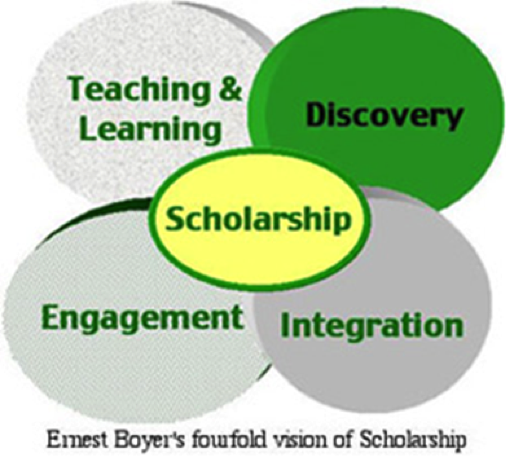
Image of SoTL
Image of SoTL


“Boyer began the process of examining the relationship between research and teaching and advocated for the scholarly consideration of how teaching methods relate to the subject content being learned by students” (McCrea & Ginsberg, 2009)

The origin of  Scholarship of Teaching and Learning (SoTL) dates back to 1990, when Dr. Ernest Boyer was the president of the Carnegie Foundation of the Advancement of Teaching and Learning. He worked to create a framework that would enhance teaching and learning capabilities of faculty within institutions of higher education.

Boyer proposed that faculty should spend the same amount of time in active scholarship within the areas of discovery learning, content integration and application of learning as they do within their chosen field of study. The intent was to promote an instructional venue that empowered student learning based on research that informed faculty instructional decision making.

In 1997, Lee Schulman became the president of the Carnegie Foundation of the Advancement of Teaching and Learning. He furthered Boyer’s vision through distinguishing scholarship of content knowledge and effective communication of content.

Today SoTL is becoming a guiding practice within higher education institutions. According to Hutchings, Huber, and Ciccone (2011, p. xix), “the scholarship of teaching and learning encompasses a broad set of practices that engage teachers in looking closely and critically at student learning in order to improve their own courses and programs, and to share insights with other educators who can evaluate and build on their efforts.” Conceptually, the above-mentioned practices are “best understood as an approach that marries scholarly inquiry to any of the intellectual tasks that comprise the work of teaching – designing a course, facilitating classroom activities, trying out new pedagogical ideas, advising, writing student learning outcomes, evaluating programs” (Schulman, 1998). When activities like these are undertaken with serious questions about student learning in mind, one enters the territory of the scholarship of teaching and learning.”

A variety of methodologies are used when actively pursuing the Scholarship of Teaching and Learning. this includes but is not limited to the “reflection and analysis, interviews and focus groups, questionnaires and surveys, content analysis of text, secondary analysis of existing data, quasi-experiments (e.g. comparison of two sections of the same course), observational research, and case studies” (Wikipedia, Scholarship of Teaching and Learning).

References:

Boyer, E. (1990). Scholarship reconsidered: Priorities of the professoriate. Princeton, NJ: Carnegie Foundation for the Advancement of Teaching..

Hutchings, P., Huber, M., & Ciccone, A. (2011). The Scholarship of Teaching and Learning Reconsidered  San Francisco: Jossey-Bass.

McCrea, E., and Ginsberg, S. (2009, April). What is the Scholarship of Teaching and Learning (SoTL)? What resources has ASHA Developed for Faculty in Communication Disorders. Access Academics and Research. Retrieved March 4, 2015 from http://www.asha.org/academic/questions/SOTL/

Wikipedia Scholarship of Teaching and Learning retrieved March 4, 2015 from http://en.wikipedia.org/wiki/Scholarship_of_Teaching_and_Learning

Digital Literacy

Originally posted on Avila University CTL website

August 2014


Digital Literacy Visual

What is digital literacy and how does it apply to the university setting? While researching this topic, I came across a website entitled US Digital Literacy . The site begins with the following definition:

“The definition of literacy has evolved in the 21st century. The basic definition of literacy means to be able to read and write. To be successful in today’s digital world, literacy goes far beyond being able to read and write. What it means to be digitally literate has reflected the change in how information is processed, delivered, and received in today’s highly connected world.”

When reviewing specific competencies within digital literacy there are three basic areas to consider:

  • use of digital technology and tools to find, evaluate and use content provided on the web;
  • having the skills to synthesize aggregated digital content from a variety of platforms and sources;
  • grow personal ability to read, interpret, validate, and manipulate content via the internet.

According to the US Digital Literacy website these skills include:

“learning how to use technology’s tools. The list of digital tools is never ending. New releases make something that was new yesterday old today. Educators as well as students must thoughtfully determine which tools are essential to their digital literacy tool kit. Tool kit’s vary from one educator to another as they do from one student to another. Once you have mastered a particular tool, move on to another so you can increase your digital power.”

Students are wired to learn digitally. They enter higher education with digital devices practically attached to their limbs. Our obligation is to teach them to become responsible digital citizens as well as discerning users of everything the internet has to offer in our globally collaborative world. Pamela Ann Kirst states in a November 2013 Zanesville Times Recorder article, “Accessing information takes a nanosecond; the assimilation of that information, the interpretation and application of it, are the skills we need today. Anyone with Internet skills can find the data; it’s the finder who can tell us why it’s important that gets recognized.”

Media literacy is a 21st century approach to education in which the Center for Media Literacy defines as:

“a framework to access, analyze, evaluate, create and participate with messages in a variety of forms — from print to video to the Internet. Media literacy builds an understanding of the role of media in society as well as essential skills of inquiry and self-expression necessary for citizens of a democracy.

‘Technology ignites opportunities for learning, engages today’s students as active learners and participants in decision-making on their own educational futures and prepares our nation for the demands of a global society in the 21st century.’ “

Instructional Strategies that Really Work

Instructional StrategiesSilent Statements are one way to engage a reader in dialogue with the text and the author’s voice. The statement should come from a quote that causes the reader to react from an emotional, perceptual, or associative stand point. The quotes should be open in structure allowing the reader to immediately bring personal context to the writing while creating an opening for the group or class to discuss various components of the author’s content.

This technique can be used the the learning management system, Canvas, by going into the collaborations tab in the left sidebar and choosing to use EtherPad or Google Drive as a platform for information exchange. Simply type the chosen quote(s) within either of these two venues and assign participants to highlight, comment, or edit the content by adding their thoughts, perspectives,and take on the subject at hand.

Pre-Conditions

In an article found in The English Journal, Bob Probst (1988) discusses the importance of having learners create a dialogue with a text. He recounts Rosenblatt’s (1985) principles for bringing the reader into a deep and personal conversation with the text:

  1. Learners should be free to share and acknowledge personal reactions to the written quote provided.
  2. Provision of  “an initial crystallization of a  personal sense of the work.”
  3. The facilitator or group participants should look for a point of contact or connection between the opinions of the readers.
  4. If the facilitator participates the influence should be, “an elaboration of the vital influence inherent in the literature {text} itself.”

For more information see Rosenblatt, L. M. (1985). “Language, literature and values”, Language, schooling, and society. (Ed). Stephen N. Tchudi. Upper Montclair, NJ: Heinemann.

Learning Outcomes

Students/Participants will communicate silently regarding a given text by highlighting and or writing about a chosen section of the given text.

Students/Participants will use the given question or scenario to guide comments about the content.

Students/Participants will interact with each other in written form (within given electronic statements) to challenge, support or defend others comments.

Assessment Strategy

Use history tab to identify the number of times a student/participant interacts with the text and others. Log number or interactions, research based support for comments, and relationship between the given prompt and student/participant text.

Instructional Strategy

Dr. Stokes has used this learning and teaching strategy in a variety of ways…Electronic Posting, Chart Paper Posting, Pass the Paper Posting. Each sharing of the text provides individual as well as group processing. The set up is easy the power of the strategy is in the process.

The Set Up:

  1. Find a piece of text that causes an internal conversation for the reader.
  2. Copy the quote onto a display that will allow the reader to comment on the text. Individual comments should be public to the group so that the conversation extends beyond the individual reader to a group conversation.
  3. Direct the readers to consider on or more of Probst following focuses. You can either “post” the focus and the question or simply provide the guiding questions with each text selection.
Focus Question
First Reaction What is your first reaction or response to the text?
Feelings What feelings did the text awaken in your? What emotions did you feel as your read the text?
Perceptions What did you see happening in the text? Paraphrase it- or retell the major content.
Visual Images What images were called to mind when reading?
Associations What memory does the text call to mind- of people, places, events, sights, smells, or even of something more ambiguous such as a feeling or attitude?
Thoughts or Ideas What ideas or thoughts were suggested by the text?
Judgments of Importance What words would you choose as most important when connecting to your work?
Identification of Problems What concerns do you have after reading the text or other comments? Do you need clarification or disagree with the content? If so, what specific concerns are apparent and how do you navigate these issues to come to a consensus about the usefulness of the text.
Author Who is the individual who wrote the original text? What life or experiential influences might the author have that may be similar or different to your background?
Response How did you respond to the text- emotionally, intellectually, associatively…?
Group Response Did you agree with statements others made regarding the given text? Did you disagree? What connections did you make with the content provided by other readers?
Connections Are there other authors that write on this subject that you referenced? Did other group members highlight research that supported or disproved the provided content?
Evolutions of Reading How did your understanding of the overall content change through participation in this learning strategy?
Text Associations Does this text bring to mind other texts? These do not have to be informational or research text. What connections did you make?

Next the process:

  1. Without speaking have each participant write their comments (based on the focus or question) on each text. The participant text should relate directly to the chosen focus including specific concerns, connections, and perspectives of the individual. At times there may even be a need to require sources written to support the comments written. Then the reader should also respond to at least two other responses from the group.
  2. It is important to note that omitting of verbal conversation creates both an internal and metacognitive processing to occur.
  3. Once the participants have discussed each text based on the facilitator’s focus, a verbal conversation of the group can extend the processing of the text.

Scholarship and Blogging

bloggingAs I peruse through the blogs that I follow, I am continually asking myself “How do these written sources inform my teaching practice and my continued learning?” I realize as I look for new information within the field of higher education that not all blog sites meet Howard Rheingold’s CRAP detection  test I teach in my Introduction to Educational Technology course. Although most blogs do include current information and continue to update and inform the topic at hand, the reliability is difficult to ascertain. Mind you, the kind of information included in the resources are well vetted yet most of the content appears to be primarily opinion. That being said, I am always wondering how much of the content is appealing due to following like minded individuals. I decided to search for a variety of blogs to identify commonalities that would help me create a selection process that would transcend my concern with the reliability and point of view of the author.

In a recent blog post in the Chronicle for Higher Education, I ran across an author I had not followed previously. Although the blog post was a year old, the contents intrigued me. I followed an embedded link to the Bloomsbury Academic site that provided insight into the authors comparison of authorship online and in book form.  Weller (2011)-the author of the blog and book The Digital Scholar: How Technology is Transforming Digital Practice- dedicates an entire chapter scholarship and the definition prior to 2000 and beyond.  In this chapter he discusses Boyer’s (1990) components of scholarship:

  1. discovery,
  2. integration,
  3. application, and
  4. teaching.

Although Boyer’s work tends to be sited and used more readily in the humanities and not in the sciences, the intention of learning, connecting, and implementation within one’s practice are all important parts of scholarship. Weller also includes seven “primitives” of scholarship identified by Unsworth (2000). These include:

  1. discovering,
  2. annotating,
  3. comparing,
  4. referring,
  5. sampling,
  6. illustrating, and
  7. representing.

Reviewing the above lists and authors, I wondered how I could use these components of scholarship to guide my selection of scholarly blogs? I believe the first step is connecting the overarching ideas in CRAP detection and the specific content elements in Boyer’s and Unsworth’s research. My first goal is to create my own iteration of scholarly components. Pulling from the two references noted above I have chosen to use the following as markers during my blog searches:

  1. an overt attempt to discover new content,
  2. annotation of prior studies that support an integration of interpretation and cross curricular use,
  3. application of content through sampling, and
  4. representation of content within teaching.

My second goal is to merge the scholarly components with Rheigold’s CRAP detection. Thus, when I am reviewing the currency of the content I will make sure that there is an overt attempt of the author to share discovery of new content. Next, I will make sure that the reliability of the information is supported by annotations of prior studies conducted within the field.
Third, I will look for the authority of the author as it relates to the application of the content through sampling within the field of study. Finally, the author’s point of view should relate the content to the application and representation within the teaching field.

I am excited to begin my trial to see if this merger helps to identify scholarly blogs. I will keep you updated on my successes and failures in addition to new information Weller (2011) shares in his book.

References:

Boyer, E. (1991). The Scholarship of Teaching from: Scholarship Reconsidered: Priorities of the Professoriate, College Teaching, 39 (1).

Unsworth J., 2000 “Scholarly Primitives : What Methods Do Humanities Researchers Have in Common, and How Might Our Tools Reflect This?’ Symposium on ‘Humanities Computing: Formal Methods, Experimental Practice.” King’s College LondonMay 13Available athttp://www3.isrl.illinois.edu/~unsworth/Kings.5-00/primitives.html, 11 February 2011

This is a re-post from August 2013

The original post can be found on the Avila CTL group site Scholarship and Blogging