“We live in a digital world.”
I heard these words on the news this morning, and thought… what does this mean for the field of education? Reflecting on changes within schools over the past 10 years, I was struck by the number of companies and organizations that have become a central part of the landscape of P-21 education.
In the past formalized learning used teachers (experts in content), text-books, in person speakers, and additional primary and secondary sources to relay content and influence student learning. We used audio visual resources to recreate experiences we were sharing with our students. Each of these assets were contained. They were purchased and used “out of the box”.
Today teaching and learning is different. It happens in various spaces that include but are not exclusive to the classroom. Resources are templated but not all inclusive in use. In other words, whether employed in K-12 or post secondary institutions, you not only need to know how to design within these digital assets but which sources of technology compliment the learning theories the institutions subscribe too.
The educational technology field is crowed. We now have choices of video creation, curriculum mapping tools, digital gaming (gamification software) and online program management companies are vying for academic funds.
Rhetorical Question: Which digital resources are important to furthering student learning and which are “nice to have” but may have no educational impact?
Enter CIOs, VPAAs, Directors of Technology, Principals and even the classroom teacher. These individuals are responsible for ensuring that purchase of digital assets further student learning. But do these employees understand the intersection of technology and pedagogy with the learner at the center of the process.
My contention is they don’t. Not as individuals. Based on a graphic Richard Millwood created, the amount of learning theorists and scientific disciplines needed to effectively identify and use technological solutions for learning is overwhelming. Take a look at the graphic below.
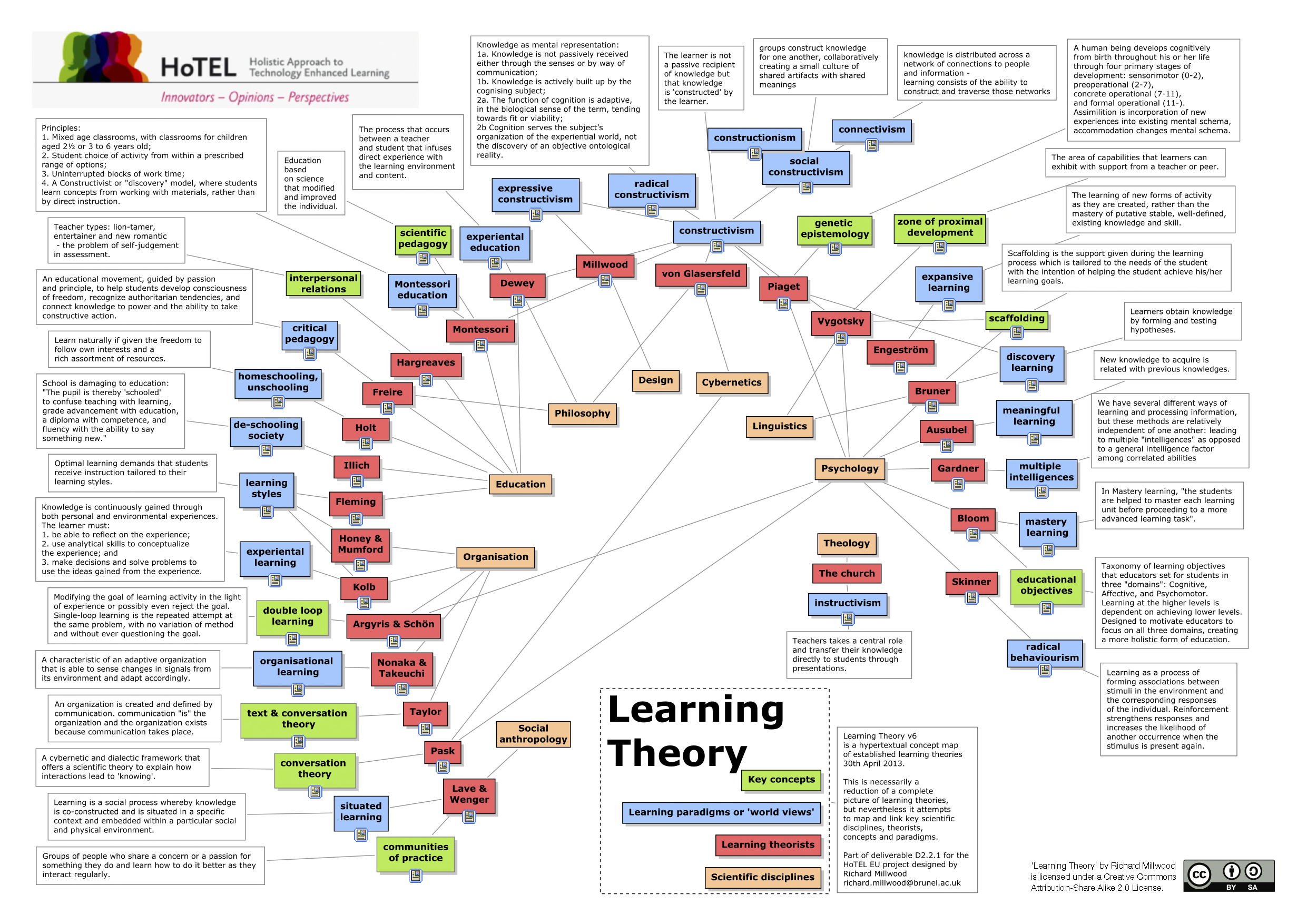
The implications are enumerable. So, how does an educational organization ensure those purchasing and implementing technological tools or systems, have the pedagogical and technological background needed to make the best decision possible? My suggestion… create an ecosystem that supports the purchasing, training and end-use of digital assets. To accomplish this a collaborative team should be constructed.
Identify five individuals who have a broad understanding of learning. Ensure that each is from a different discipline: (a) philosophy, (b) education, (c) design/training, (d) psychology, and (d) cybernetics. Then, as a team, create a statement of learning that best describes your organization’s approach to education.
Are you a social constructivist organization with a flair for double loop learning?
Maybe you are an institution who believes that interpersonal relations, critical and scientific pedagogy are the philosophical foundation of your curriculum construction.
No matter what the definition of learning theory you subscribe to, understanding the implications of choosing digital assets is the key. At least one person on your team needs to be able to translate your school’s learning theory into usage of educational technology to promote student learning. Then effectively translate the intersection of these two worlds to the rest of the educational stakeholders.
Without the understanding of how the digital world and learning theory intersect; educators and educational institutions are likely doomed to spend millions of dollars on assets that not only live unused in cyberspace, but possibly get in the way of student learning success.
 Reimagining Education